EPLUSEPLUSAI · IoT · Vision · Software

APPLIED AI · IoT · VISION

From data to decisions. From the field to value.

We analyze changes captured by sensors and images captured by cameras. EPLUS develops AI solutions that connect data collection, model training and inference with operations and business systems.

EPLUS / APPLIED INTELLIGENCE01 — 02
01 / IoT INTELLIGENCE

TasumHouse AI

Sensor signal analysis

ESP32→AI MODEL→INSIGHTS
02 / AI VISION

eVision AI

Product image classification

CAMERA→YOLO11→OK / NG
DATA · MODELS · OPERATIONSIoT × VISION
FIELD DATAWi-Fi CSIIsolation ForestYOLO11PySide6MODEL OPERATIONS

01 / SOLUTIONS

Two ways to put AI to work

IoT for changes in a space. Vision for product quality. Different data, connected through an operational perspective.

IoT INTELLIGENCE

TasumHouse AI

AI that reads environmental change
ESP32Wi-Fi CSIV2 MODEL

An integrated IoT platform that collects Wi-Fi CSI, temperature and humidity and analyzes unusual signal patterns. Customers, sites, locations and devices are organized with access permissions.

  • ESP32 · MQTT sensor collection
  • V2 activity/night model training and versioning
  • Feature generation and inference about every 5 minutes
  • Map monitoring · collection, training and job status

Anomaly scores describe environmental signal changes. They do not establish movement, falls, sleep states or medical risk.

AI VISION INSPECTION

eVision AI

Quality inspection trained per product
YOLO11LOCAL AIOK / NG / HOLD

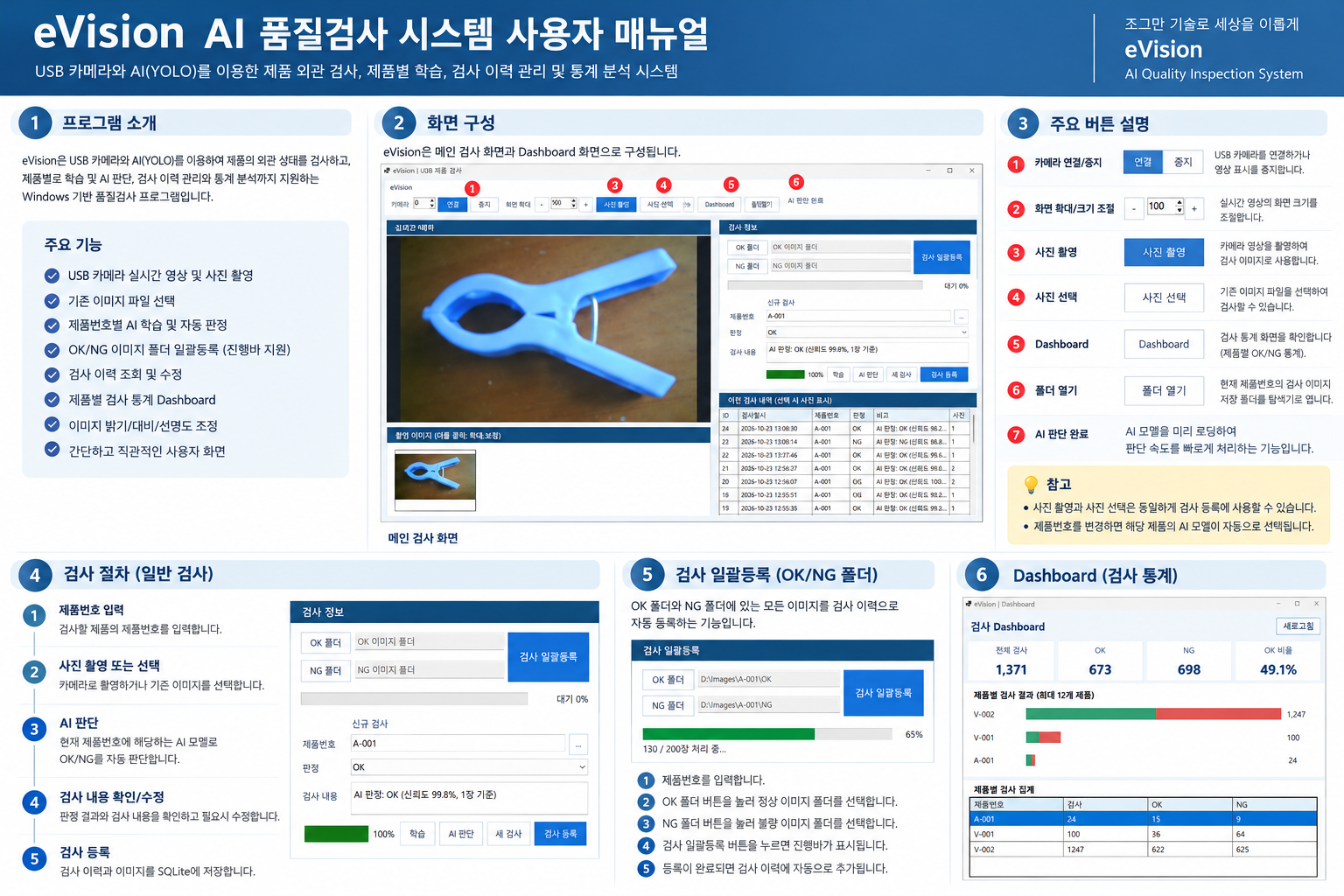
AI visual inspection starting with a USB camera and Windows PC. Built with Python, PySide6 and YOLO11, it trains on product images and connects OK/NG/hold decisions with inspection records.

  • Capture/import images · confirm product/LOT
  • Product-specific YOLO11 image classifiers
  • Resident AI worker · model cache · local inference
  • SQLite inspection records · product statistics dashboard

The current model classifies images. Defect localization, mobile inspection and MES/production-line integration are future extensions that require field validation.

02 / HOW WE BUILD

One flow from collection to operation

For model outputs to serve real work, data quality, decision criteria and operating records must be designed together.

  1. 01

    Collect

    Sensors · Images

    Define installation and capture conditions to obtain usable data.

  2. 02

    Train

    Data · Models

    Separate data by product and environment and manage model versions.

  3. 03

    Decide

    Inference · Validation

    Present scores and classifications for review against field criteria.

  4. 04

    Operate

    Records · Workflow

    Record processing status and results and connect them to dashboards and work.

03 / RESPONSIBLE OPERATIONS

AI with visible operations

Designs expose data freshness, model versions, processing status and decision records alongside results.

Data quality
Check delays, valid data, image clarity and labels
Human review
Review ambiguous or low-confidence results
Continued validation
Revalidate after changes to location, lighting or products

04 / ENGINEERING JOURNAL

Technology, documented as we build

Read about implementation, current features and future directions on IT Manmulsang.

Early Windows version manual+

This reference shows the original C# WinForms interface. See the development article for the current Python/PySide6 version.

Open full-size manual ↗Early Windows version manual

LET’S BUILD WITH AI

Where could AI help your operation?

We review your data, inspection criteria and existing systems to define a practical scope together.

Discuss AI adoption ↗